
In 1990 or 1991, three of Springfield’s best-known television and radio personalities discussed local broadcast history with two interviewers from the Springfield chapter of Women in Communications Inc. The plan was to add historical items to “Making News in Mr. Lincoln’s Hometown,” a media directory and guidebook the chapter produced and sold for many years.
The broadcast veterans were Shelby Harbison from WTAX radio, Bill Miller from WTAX and Sangamon State University, and Wally Gair from WICS-Channel 20 television. Nancy Zimmers and Marygael Cullen represented WICI.
What follows are excerpts from their discussion. Note that the conversation bounced from issue to issue, and some potentially intriguing topics were not pursued. (The transcript has been lightly edited for clarity.)
“We prided ourselves in being first”
Miller: Something that might be interesting is that on election night in the old days … Springfield media were competitive in the old days. I’m not sure they’re as competitive today – first at the scene of the fire, we prided ourselves in being first.
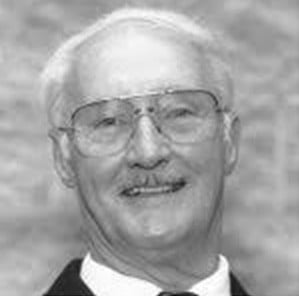
Miller (University of Illinois Springfield)
And in the old days on election day, before computers, we (WTAX) – we, I think, could rightfully claim that we were first with election results. We went all out for it.
One night, we were doing election returns, and I knew that the other stations were copying (us), so I said, “Get your pencils out, get ready.” The reason we knew it was because every once in a while, when a race was heavily in favor of one candidate, we’d change the returns a little bit. Like 950, (we’d say) was 943, and then we would listen and the other stations would have 943, so we knew they were copying us.
What I was getting to was that we used to buy candy bars. Go down to Yummers* and buy like so many boxes of candy bars, Milky Ways, and take them out to the polling places and have a little note at the bottom of the box, saying, “When you count your returns, call us at …”
And then we used to have a battery of people out at the station who would take those phone calls, and that’s how we got our results. In fact, we bribed the election people to call us. Otherwise, you would have to wait until …
Gair: Is the recorder still on?
Miller (laughing) … You’d have to wait until they got down to the election headquarters before you got them. So we would get our results faster that way.
Zimmers: And it worked?
Miller: Yeah. And I remember, we got into a war. We started with a few candy bars, and then WMAY started with donuts. They (election workers) like donuts. Then we’d have to up that a little bit (all talking and laughing).
*“Yummers” is a transcription error. Miller almost certainly said “Mummerts,” the name of a pharmacy then at 506 S. Seventh St. – Ed.
First videotape equipment at WICS-Channel 20
At the time, WICS operated from the Leland Hotel building, Sixth Street and Capitol Avenue. – Ed.
Gair: We got our first videotape equipment in 1962. What’s really funny is when they brought it in … the Leland building is really small and narrow, and, you know, this old videotape equipment that they pushed (was) really big stuff.
There was an alleyway between the Leland building and I guess like a hotel. So what they did is that they went into the alley and they had it hoisted up on a crane, and they just broke the window. It was a big glass window. They broke the window and came in through the window and chopped it down and put it in place because they couldn’t get into it any other way.
Radio technology
Miller: Thinking about film in the old days, Shelby and I remember the old wire recorders, which preceded the tape recorders. You had a little like a banded piano wire, real fine wire that went from reel to reel. … One time I was flying to report on floods on the Illinois River. I was in a little plane, and I had that wire recorder. The wire came off the spool and started winding around the cockpit and got around my neck and the pilot’s neck and everything else. To splice it, you just had to have a pair of pliers; that’s how you spliced them. We kept the wire recorder on WTAX for years – it’s probably long gone by now.
Harbison: We had a little disc recorder out there too.
Cullen: A little what?
Miller: Disc recorder.
Harbison: We would actually record it on a disc – on a phonograph record.
Miller: Electrical transcription, they called it. (The recording) went from the outside in.
Newspapers vs. radio and TV
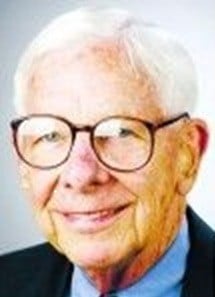
Harbison (Findagrave.com)
Harbison: Well, see, when Bill and I started in radio, we weren’t too well liked by the newspaper guys, the print media, and particularly in sporting events.
We’d be out doing a baseball game at Lanphier Park, and the sports editor at the time at the Journal* would go out of his way to make as much noise as he could – pounding and like that. There was really resentment of the electronic media moving in. …
Miller: Yeah, they would never mention us in the paper. In fact, I have more pictures of me interviewing the mayor where all you can see is my wrist – you know, from here up. And they would airbrush the call letters off the microphone.
* Bob “Dry” Drysdale (1896-1965) was Illinois State Journal sports editor from 1922 to 1961. His column, “The Dope Bucket by Dry,” was a popular regular feature. – Ed.
The WICS chimpanzee
Gair: There was a show called Pegwill Pete’s Magic Circus. Every day for 45 minutes a day, from 5:15 to 6 p.m., it would be on, (with a) live studio audience made of kids. Puppets, movies … (and) we had probably the only TV station in the country with its own chimpanzee.
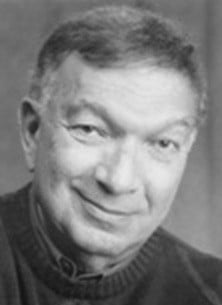
Gair (Findagrave.com)
Zimmers: That’s right.
Gair: It lived there. The first day that I was hired, the first day that I came to Channel 20 to work, I just did some announcing. I was doing voice-over, so I’m in the announcement room, which is dark generally with a little light just to see the copy and the microphone here, and everything is closed in.
I’m doing some spots live, you know, it is just a voice-over. And I hear this door in back of me open and close and I’m readying and I switch off the mic and I turned around and I nearly jumped out of my socks. Here is this big thing going (untelligible), and it scared the living daylights out of me.
Zimmers: They probably had done it on purpose.
Harbison: Didn’t you also have to feed it?
Gair: No, thank God. Wingerter (Bill “Pegwill Pete” Wingerter – ed.) … no, a guy by the name of Bob Wilson used to be its trainer. He was one of the floor directors.
Zimmers: He lived on the set though? I mean, he lived at the station?
Gair: We had a cage built for him, and he lived right there.
Zimmers: What was his name?
Gair: They had two. The first one was Tamba, and the second one was … I can’t remember his name. Tamba was the first one and then he got old, and when they get old, they get a little tough to handle.
Participants
Wallace “Wally” Gair (1931-2007)
Wally Gair spent 20 years with WICS-Channel 20. He was executive director of the Illinois Broadcasters Association for another 20 years, where he received the association’s first Lifetime Achievement Award. Gair was a founding member of the Museum of Broadcast Communications in Chicago and founder of the National Association of Broadcast Executives.
Shelby Harbison (1924-2019)
Shelby Harbison joined WTAX radio as a sports announcer and salesman in 1948 and became the station’s general manager in 1964. He would go on to own and/or manage more than a dozen associated radio stations throughout the Midwest over the next 25 years. He was a longtime member of the Illinois Broadcasters Association, including a period as president, and received the IBA’s Vincent Wasilewski Award for a lifetime of excellence in broadcasting.
Outside broadcasting, Harbison served two terms on the Springfield School Board and was president or board chairman of the American Business Club, the Springfield YMCA, the Springfield Economic Development Council and the Service Corps of Retired Executives among many other leadership posts.
Harbison is a member of the Springfield Sports Hall of Fame and the Illinois Basketball Coaches Association Hall of Fame. He was named the Copley First Citizen in 2005.
Alvin William “Bill Miller” Pistorius (1923-2003)
Bill Miller (his broadcast name) was a journalist for 25 years as WTAX news director and manager of the Capital Information Bureau. Miller went on to direct the Public Affairs Reporting Program at Sangamon State University (today the University of Illinois Springfield) for 19 years, retiring in 1993.
Miller was a co-founder of the Illinois News Broadcasters Association and served terms as president of the Illinois Associated Press Broadcasters Association and the Sangamon Valley chapter of the Society of Professional Journalists, where he won the First Amendment Award in 1982. Over his career, he received the Edward R. Murrow Award, another First Amendment Award from the National Center of Information Studies at Loyola University and the James Craven Freedom of the Press Award from the Illinois Press Association. He was named Illinoisan of the Year by the Illinois News Broadcasters Association in 1989.
Interviewers
Nancy S. Zimmers of Springfield, retired director of public affairs at Southern Illinois University School of Medicine, was one of the founders of the Springfield chapter of Women in Communications Inc. (since reconstituted as the Mid-Illinois Communications Association).
Marygael Cullen of Springfield, a publicist and writer, is a former Springfield director of tourism and director of the Springfield Children’s Museum.
Hat tip: Thanks to Nancy Zimmers for providing SangamonLink with this transcript.
Original content copyright Sangamon County Historical Society. You are free to republish this content as long as credit is given to the Society. Learn how to support the Society.