
The “lady managers” of the 1911 Illinois State Fair’s domestic science school were appalled when they learned one of their instructors was giving young women advice on cosmetics well as hygiene.
The 102 young women in attendance “need not trouble their pretty heads longer about the relation of French face powder to the house beautiful,” the Illinois State Journal reported on Sept. 30, 1911.
The offending instructor, Jeannette Miller, had been hired to “instruct the young women in the care and study of the body, the science of the sick room, hygiene, … emergencies and the care and study of little children.”
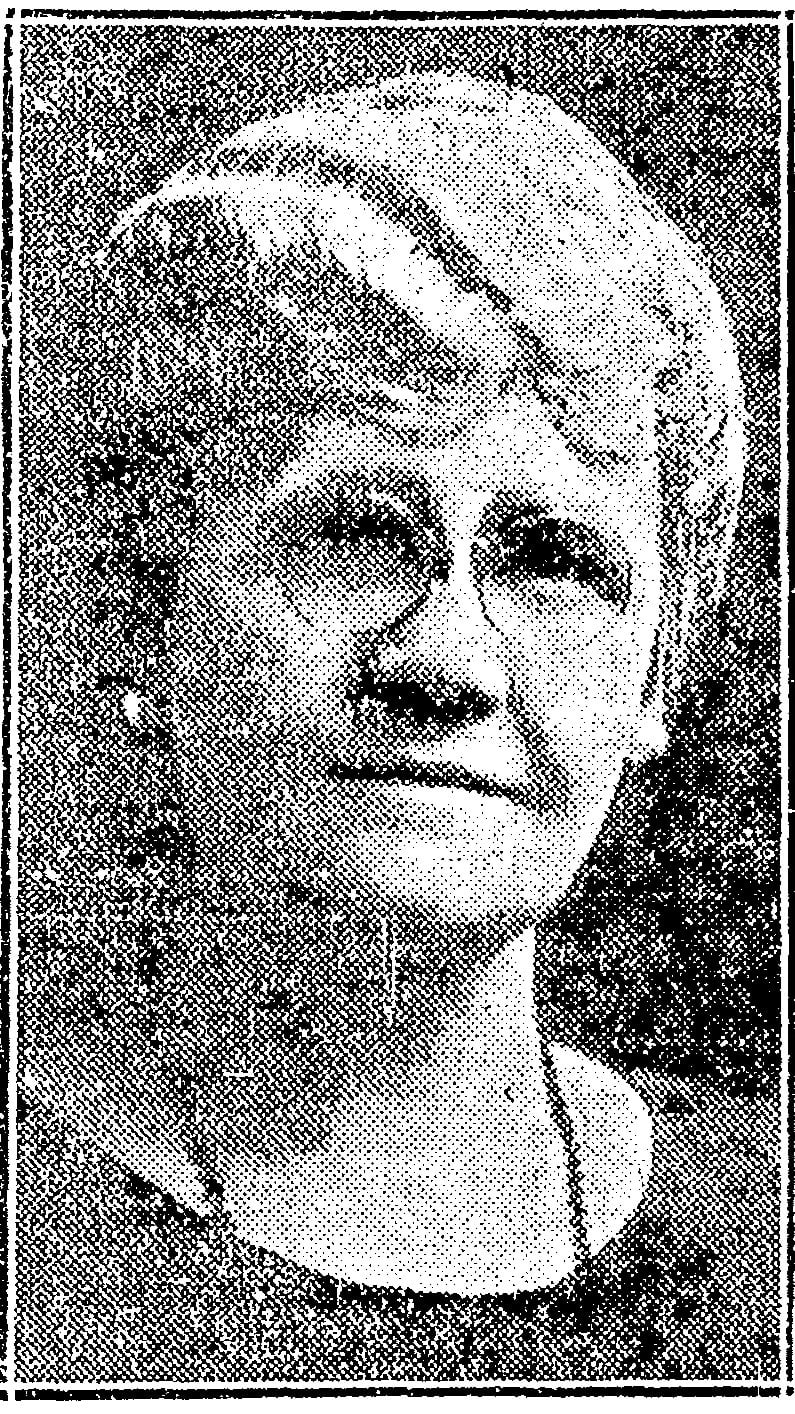
Jeannette Miller, 1923 (Courtesy State Journal-Register)
The fair’s domestic science school, billed as the only one of its kind in the world, was open to women from age 16 to 40, although the vast majority of attendees were at the young end of that range. Students bunked in the fairgrounds’ Women’s Building. Courses focused on cooking and housekeeping skills.
Miller had 15 years experience as a nurse, including several years directing a nursing school in Milwaukee. However, she also operated a beauty parlor in Springfield, and at the fair, the Journal said, she was “devoting much of her time giving the young women tips on how to be beautiful.”
Mrs. Miller’s subjects are said to have included advice on how to buy and wear false hair to the best advantage; what brand of face powders will produce the best results; and how to massage the face in order to remove wrinkles and cheat Father Time.
The board of lady managers, busied with their own work, were unaware of the nature of the nurse’s lectures until several of the young women made inquiries at the office yesterday as to where they might purchase certain recommended brands of face cream and French face powders. An investigation followed, and when the true state of affairs was disclosed the managers held a consultation and reprimanded the nurse.
“We ladies on the board of managers do not countenance any ‘beauty parlor’ lectures, neither do we advertise any fancy French brands of face powder,” Mrs. D.R. Cutler of Benton, the treasurer of the board, said to The State Journal. “There has been a grievous blunder somewhere.”
The Journal added comments from another anonymous “lady manager.”
We inquired among the young women and found that many had taken the lectures on how to be beautiful much to heart and were determined on ordering rats (hair extensions – ed.), false hair, face cream and French face powders for their personal adornment. Mrs. Miller has been a trained nurse but her recent profession has crept into her instructions somehow, much to our displeasure. But the matter is settled now, and there will be no further talks on “How to Be Beautiful” delivered in this school.
The Journal objected to that decision in an editorial the same day.
(D)oes domestic science confine itself to limitations fixed by the drying of the supper dishes and darning the baby’s nightie? Are we to understand that it stops short after the student has been educated in the making of two-colored angel cake and rainbow ice cream? …
Crack writers for the women’s pages are unanimous in their opinion that to be beautiful is a womanly duty. … It is a part of the domestic scheme, they say, that the women of the household be attractive. Logically, therefore, the girls must learn how to doll up a bit.
There’s no indication the editorial changed the minds of the fair’s domestic science managers. The ban on beauty advice remained in effect.
The young domestic science students were a mutinous lot anyway. They hadn’t taken it well a week earlier when the students assigned to dry dishes were singled out for sloppiness.
“Conspicuous among the objects displayed on the platform yesterday morning,” the Journal reported on Sept. 24, “was a large white vegetable dish, grimy and streaked with dish water, placed there as an object of humiliation to the dish-wiping squad.”
Nellie Kedzie Jones, head instructor of the domestic science school, took the group to task.
“The captain reports unsatisfactory work …,” Mrs. Jones announced sternly, “and I hope the young women who are guilty of such carelessness as is here displayed will not allow it to happen again.”
The captain of the censured squad blushed guiltily and hung her head at the indignant glances that were cast in her direction by seventeen young women.
“Oh, I don’t care, she grouched all morning,” a girl whispered shrilly to her companion.
“She’s a cross old thing anyway,” another girl remarked in a tone sufficiently audible for the chagrined captain to overhear. “If they want us to dry their old dishes properly, they’ll have to give us dry dish towels.”
The anonymous Journal reporter – who obviously was covering the domestic science school very closely – discerned “a restless movement” that suggested the entire student body might take sides with the indignant dish dryers.
Jones stepped in quickly, “with a beaming smile,” the story said. “We won’t discuss the matter further, girls,” she said, “only don’t allow it to happen again.”
No hard feelings developed from the beauty-tips controversy. Jeannette Miller was back at the domestic science school for the 1912 fair. This time, though, she apparently stuck to health instruction.
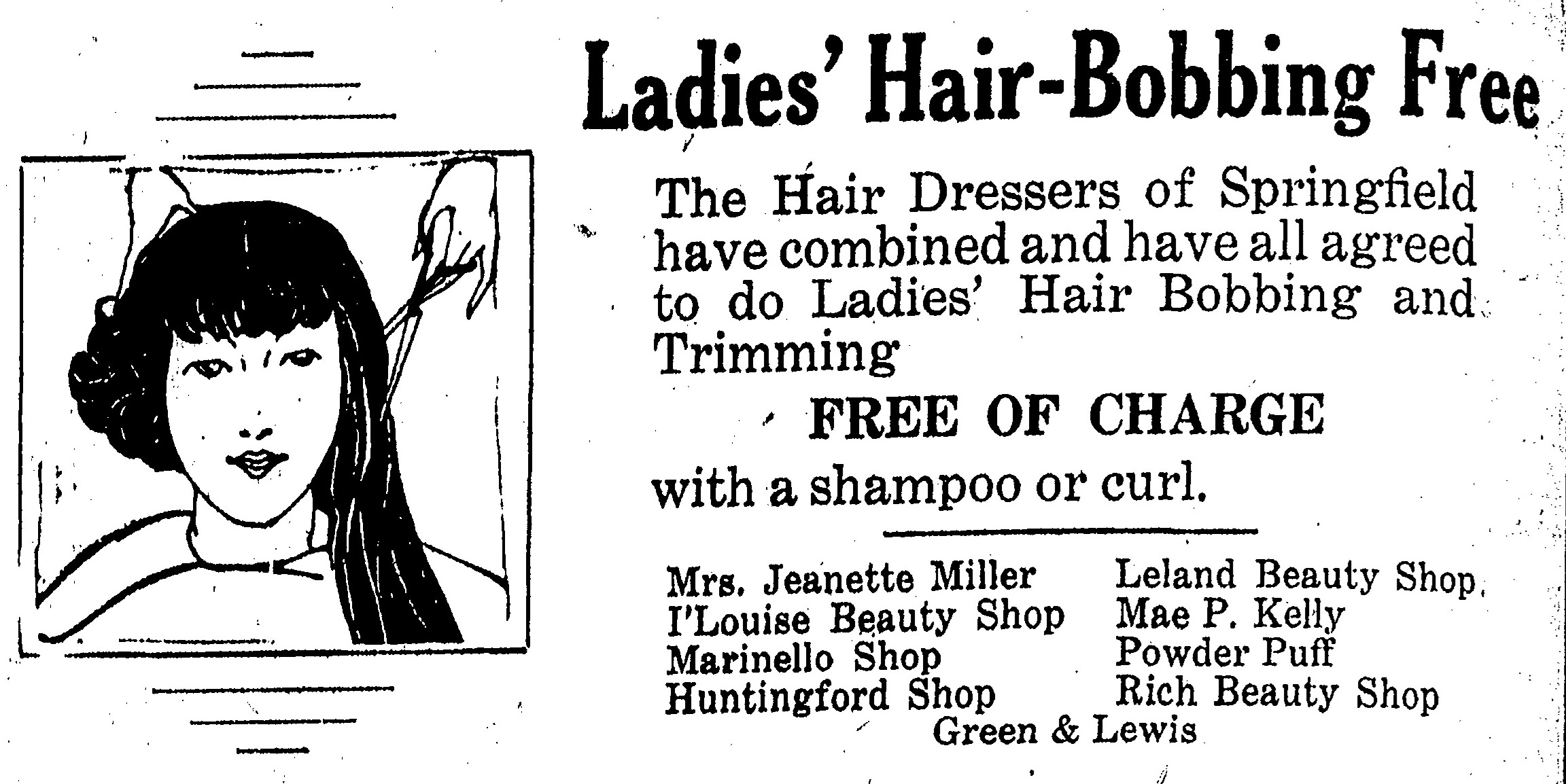
Jeannette Miller (first name misspelled) was among local hair dressers who offered “free bobs” in 1923 (SJ-R)
Jeannette Miller
Jeannette Roberts Miller (1858-1932) operated her beauty parlor in the Independent Order of Odd Fellows building, Fourth and Monroe Streets, from 1901 until the mid-1920s. She wasn’t Springfield’s first professional beauty consultant – the earliest newspaper ads for hair dressers appeared in the 1890s – but she seems to have been in business longer than any other early beauty stylist.
 Miller also was active in both the Springfield Business and Professional Women’s Club, including at least one term as the club’s vice president, and the Women’s Club of Springfield.
Original content copyright Sangamon County Historical Society. You are free to republish this content as long as credit is given to the Society. Learn how to support the Society.