

Auburn’s modern/not modern bandstand, 2026 (SCHS)
The double-decker bandstand on the Auburn square evokes the early 1900s, when growing pains preoccupied Auburn residents.
Today’s bandstand is a 21st-century replica of Auburn’s original two-story bandstand. The first bandstand was built in 1905, shortly after Auburn residents voted to convert what had been a village into a city. That, in turn, prompted construction of a city hall as well as the bandstand.
The projects left Auburn in debt and contributed to hotly contested municipal elections in 1904 and ’05. Despite the turmoil, Dr. J.A. Wheeler, who had shepherded the changes as village president, stayed in office after winning Auburn’s first mayoral election.
Two-story bandstands were unusual in the early 1900s, but by no means unheard of – in most cases, bands performed from the top floor while refreshments were sold on the ground level. A number of original double-deckers still stand around the country. Despite being a reproduction, Auburn’s bandstand probably is one of the best-known, thanks to its location along historic Route 66.
The original bandstand hosted its first big event, the annual Auburn Fish Fry, in August 1905, only a few weeks after it was completed. Thanks to aggressive promotion, the largest crowd ever in Auburn history – some 18,000 people – crowded the city square.
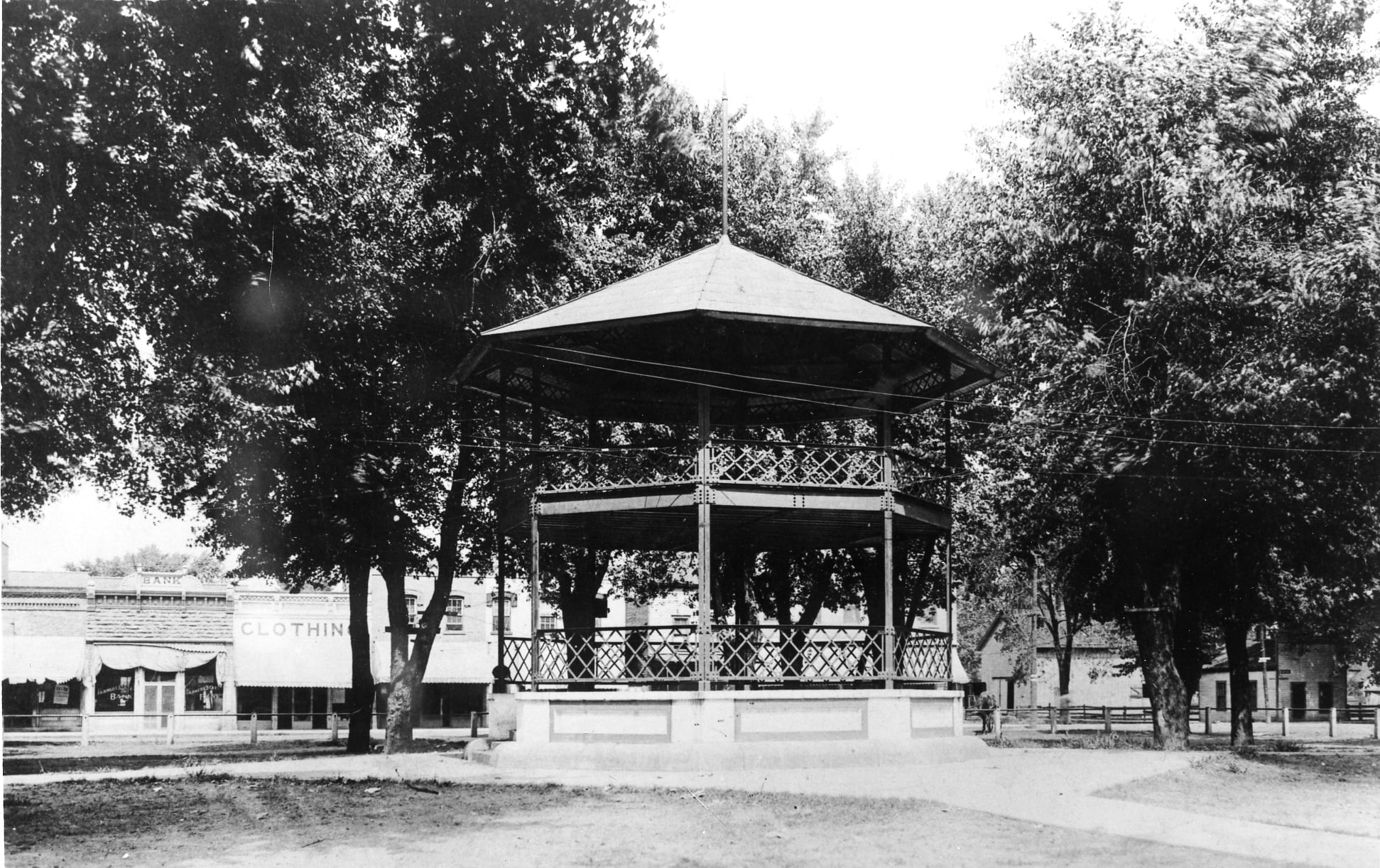
1905 bandstand, undated (Sangamon Valley Collection)
“The little town had on its gala attire and presented a beautiful appearance, especially after dark when the innumerable incandescent lights were lighted,” the Illinois State Register reported. “At various intervals through the day the Auburn merchants (band) or the Pawnee band discoursed music from the new band stand in the park, which has just been completed at a cost of $2,000. The new cement walks in the park came into good play yesterday in the early part of the day.”
In addition to fish, the event featured entertainment ranging from athletic contests to contortionists, child acrobats, bicycle stunts, and “a ladies nail driving competition.”
“Although there were a number of crooks present during the day, several officers from this city were present and kept close watch of them, giving them no chance to operate,” the Register added. Only one person was arrested during the fish fry — “a man who had imbibed too freely and became boisterous.”
Another giant crowd filled the square for the 1915 edition of the Sangamon County Old Settlers Reunion.
For that event, the bandstand hosted speakers – the keynoter was Auburn’s Methodist minister, the Rev. A.H. Harnly (1864-1942) – and a concert by the Auburn Cornet Band. “The public square of the city appeared like the midway at the state fair grounds during the exposition,” the Register reported.
The 1905 bandstand was demolished in 1962 and replaced by an uncovered, ground-level square surrounded by a 30-inch-tall stone wall and a line of shrubs. A group of Auburn merchants initiated a move to replace that charmless feature in 1999.
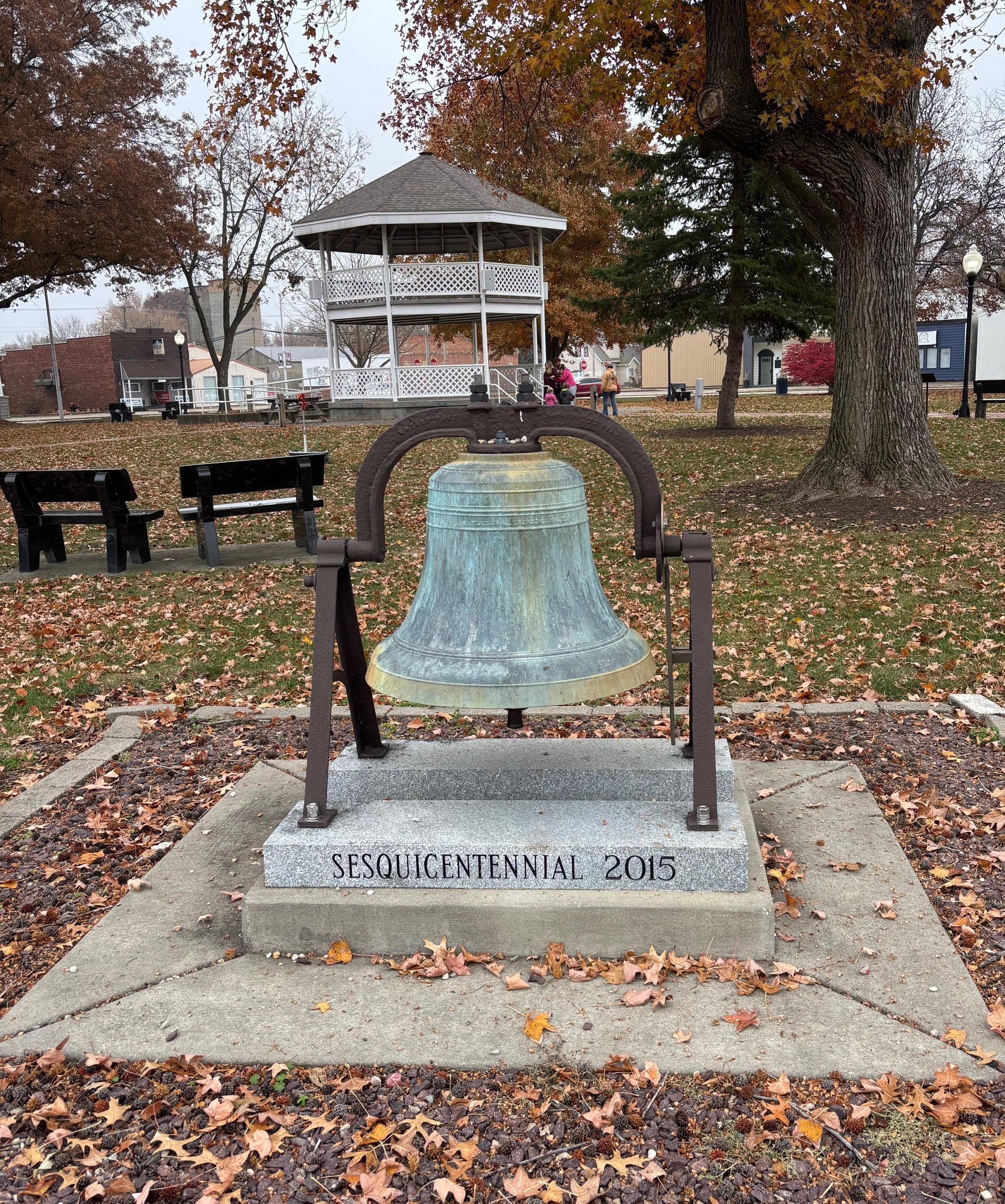
Former Auburn fire bell, installed on the square in 2015 (SCHS)
“We wanted to bring attention to the Auburn square,” Barb Stamer, one of the members of the merchants’ committee, told the State Journal-Register. “We wanted something unique and something to see.”
Dedication ceremonies for the replica bandstand in August 2001 included an ice cream social, a concert by the Ansar Shrine Jazz Band and a community singalong of the George M. Cohan song, “You’re a Grand Old Flag.” Cohan wrote the song in 1906, only a year after Auburn celebrated construction of its original bandstand.
The Auburn square also features the bell from the former Advent Christian Church. It was added to the square as part of the city’s sesquicentennial celebration in 2015. The church bell served as the town’s fire bell from 1877 until World War II.
Auburn’s Route 66 historic marker, which sits in front of the Auburn Community Center on the west side of the square, includes a photo of the historic bandstand.
Dr. J.A. Wheeler
John A. Wheeler (1871-1925) – physician, mayor, sheriff, legislator, sportsman and politician – was described as “one of the most picturesque characters in present-day Illinois politics” in his Illinois State Journal obituary. His death was the Journal’s front-page banner headline on April 4, 1925.
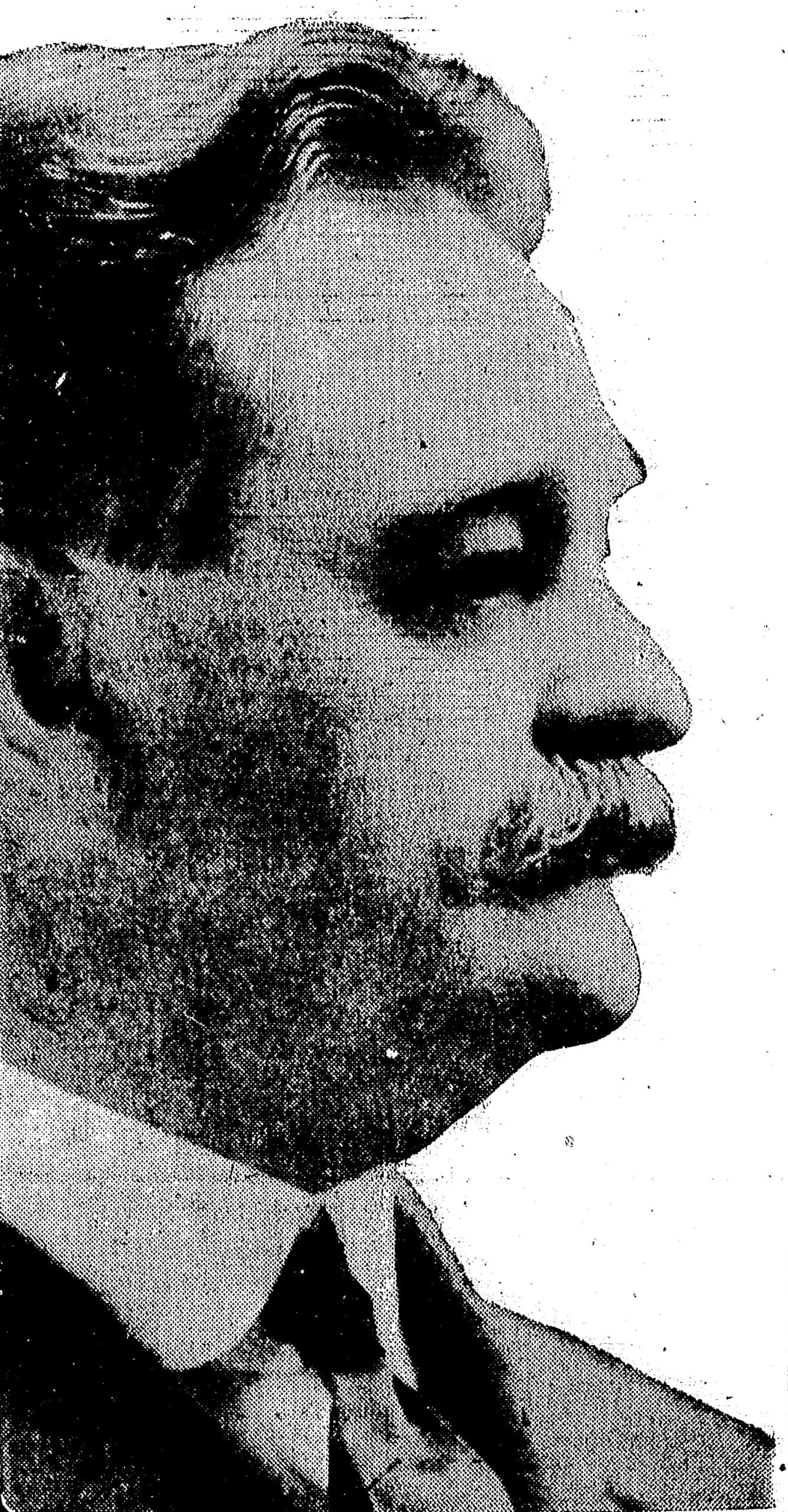
Dr. J.A. Wheeler, circa early 1900s (SJ-R)
Wheeler died at the Lincoln State School and Colony, a state facility for mentally disabled children where he had been managing officer for two years.
Wheeler was still in his 20s when first elected Auburn village president in 1897. He remained president and then mayor, following the change in municipal government, until 1909.
Wheeler, a Republican, also served in the Illinois House for two terms beginning in 1899. In that post, Wheeler fathered legislation creating the state game department, which he went on to lead from 1904 to 1913. In 1906, Wheeler located the state game farm near Auburn. Thousands of quail, partridges, pheasants and other game birds were raised there over the next decade for distribution to hunting sites around the state.
Booted from the game office after a change in governors, Wheeler ran for and won a term as Sangamon County sheriff in 1914. That was followed by two terms in the state Senate. Wheeler, by then a Springfield resident, lost several local and state election races over the next few years. During the flu epidemic of 1918-20, he also directed Springfield’s emergency flu hospital at the Illinois State Fairgrounds.
Gov. Len Small named Wheeler to head the Lincoln State School in 1923. Even accounting for obituary hyperbole, he seems to have been a conscientious, caring guardian for the children at the school. According to the Journal’s obituary:
When a group of legislators visited him, they found Doctor Wheeler in his office chair, twenty youngsters about him and victrola going. Before he went to Lincoln, children were never permitted near the office, but under his direction not only children, but their pet dogs, were commonplace there. (Wheeler, a dog fancier himself, encouraged pets of all sorts at the school – ed.) …
From all part of the United States, heads of institutions traveled to Lincoln to visit Doctor Wheeler. He emphasized one thing most – there must be no cruelty in the treatment of the feeble minded. For violations of this rule, he discharged more assistants than all other directors of charitable institutions in the state during his first year in charge.
Only a short time ago, Doctor Wheeler came to Springfield for a day. With him were four youngsters. He took them to the various offices and in introducing them said, “they are my little buddies.”
 Wheeler is buried in the Auburn Cemetery.
Original content copyright Sangamon County Historical Society. You are free to republish this content as long as credit is given to the Society. Learn how to support the Society.